Getting started with Game Advisors
| Site: | WFDF Academy |
| Course: | Getting Started with Game Advisors for National Federations (NFs) |
| Book: | Getting started with Game Advisors |
| Printed by: | Guest user |
| Date: | Friday, 23 October 2026, 8:36 PM |
Description
A short book for National Federations thinking about using Game Advisors. It takes about 15 minutes to read, and there is no test.
Getting started with Game Advisors
This short book is for National Federations (NFs) that are thinking about using Game Advisors (GAs) at their events. A GA helps players manage their own game. GAs do not make calls: the players still own the game.
It is not a course, and there is no test. It takes about 15 minutes to read.
What your NF needs to decide
Before anyone trains a GA, your NF needs to settle four things:
- Which events will have GAs. GAs need games to get good, and to stay good.
- The rules those events play under.
- The money. Events with GAs have costs.
- Your Country Coordinator. The person who runs your GA programme for you.
The next pages cover each one, and what other countries have done.
Who already uses GAs
- how many GAs there are, and where
- which federations already run their own GA programmes
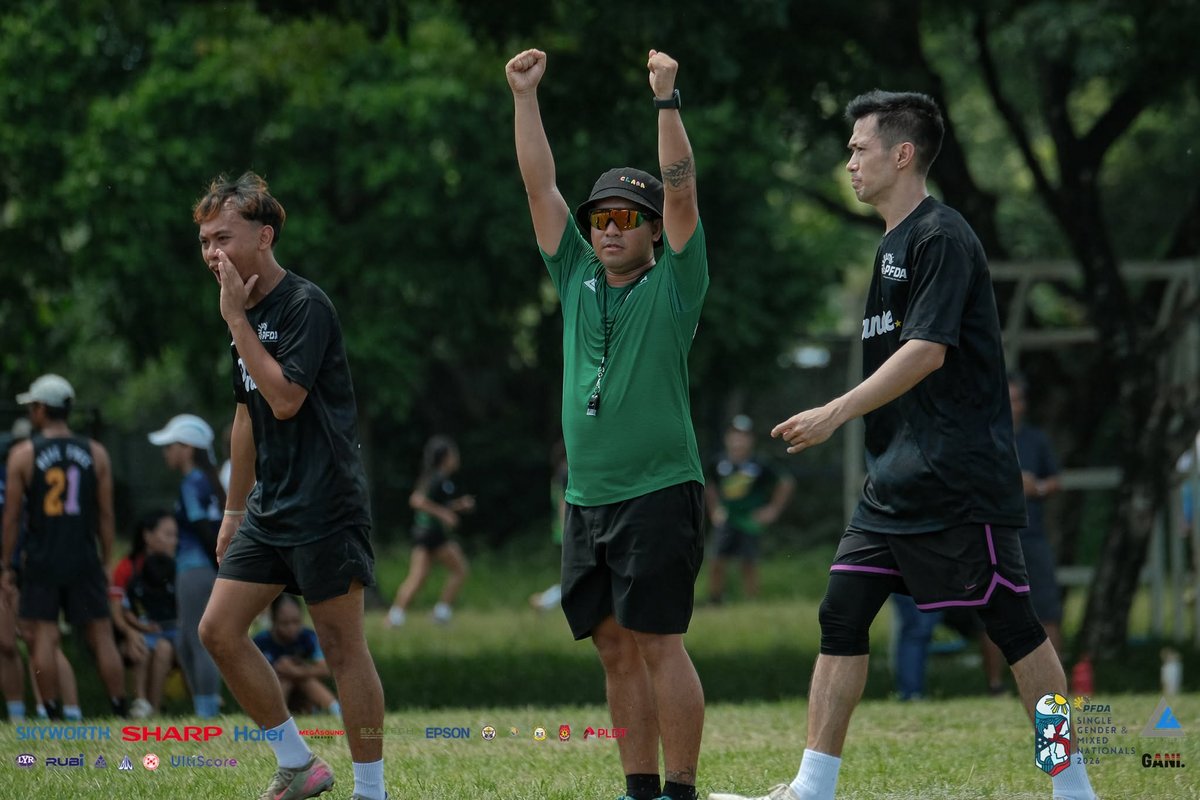 A GA at work. (Philippines)
GAs around the world
In September 2026, WFDF's GA system (TOSS) had 349 GAs in 33 countries. About 100 of them work at world and regional events. The rest work in their own countries.
| Region | GAs | Countries |
|---|---|---|
| Asia and Oceania | 167 | 11 |
| The Americas | 132 | 8 |
| Europe | 49 | 13 |
| Africa | 1 | 1 |
The largest groups are in Colombia (69) and Australia (63). Eleven countries have just one GA, so a programme can start very small.
These are registered GAs. Not all of them work regularly. In some countries, a small group does most of the events. That small, active group matters more than the total (see Keeping your GA pool healthy, in the course Game Advisor Country Coordinators; you may need to enrol).
Who runs their own programme
| How long | Federations |
|---|---|
| Nearly ten years | Australia, Colombia |
| About the last five years | China, Malaysia, Mexico, Panama, Poland, Singapore, UK, and others |
| Building a programme in 2026 | France, the Philippines |
| Early planning | Hong Kong, Singapore |
What your NF gains
- the benefits NFs find from having their own GAs
- why this will not guarantee you WFDF events
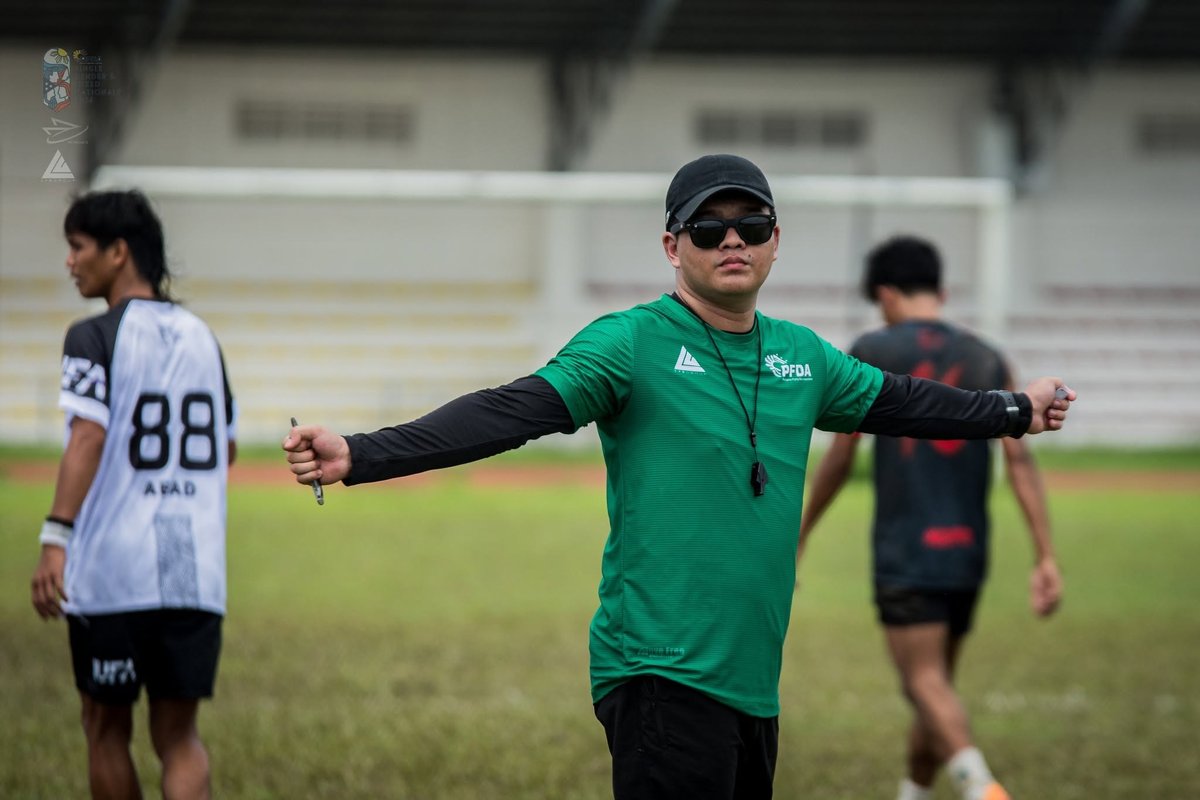 A GA gives a clear signal. (Philippines)
Why GAs exist
WFDF introduced GAs after a few widely watched games in 2012 and 2013, where aggressive play, retaliatory calls and long, heated discussions made games hard to watch and hard to play in. Players already had volunteers, Spirit scores and people to deal with misconduct, but nobody could help during a game, when a call got stuck. To read more, see Chapter 1, "Why have GAs?", of the WFDF Game Advisor Manual.
A closer link between Spirit and the game
Supporting the Spirit of the Game is the reason GAs exist.
- GAs see the detail. A GA works inside one game. They watch each play, the flow of the game, and how players treat each other. They see things a Spirit score from the other team can miss.
- GAs help during the game. Decisions always stay with the players. GAs learn to help players stay in a good frame of mind. Sometimes a GA being there is enough. Sometimes a reminder of the tools players already have helps keep Spirit high. A Spirit Director usually only hears about a problem after it has happened.
- GAs can help a team, or a whole country, improve. You may know that one team has had problems. But your whole playing community may also have an issue, for example with travel calls, double teams, or just how to resolve calls calmly and respectfully. GAs can help your players improve by clarifying and showing good practice.
Keeping players in the sport
Many GAs are players who can no longer play at the top level, but still want to be involved in the sport. Being a GA gives them a way to stay involved, and your community keeps their experience.
Better rules knowledge
Most players learn the rules by word of mouth. So your community only knows the rules as well as its best-informed players do. GAs must know the correct rules and how they are interpreted, and they spread that knowledge.
This will not guarantee you WFDF events
If you bid to host WFDF regional or world events, saying you can supply some GAs locally will not hurt your bid. But it is not a good reason to build a programme on. A programme built only for one event will not last.
Plan the events first
- why you need events for GAs to work before you recruit them
- how many events is a good start
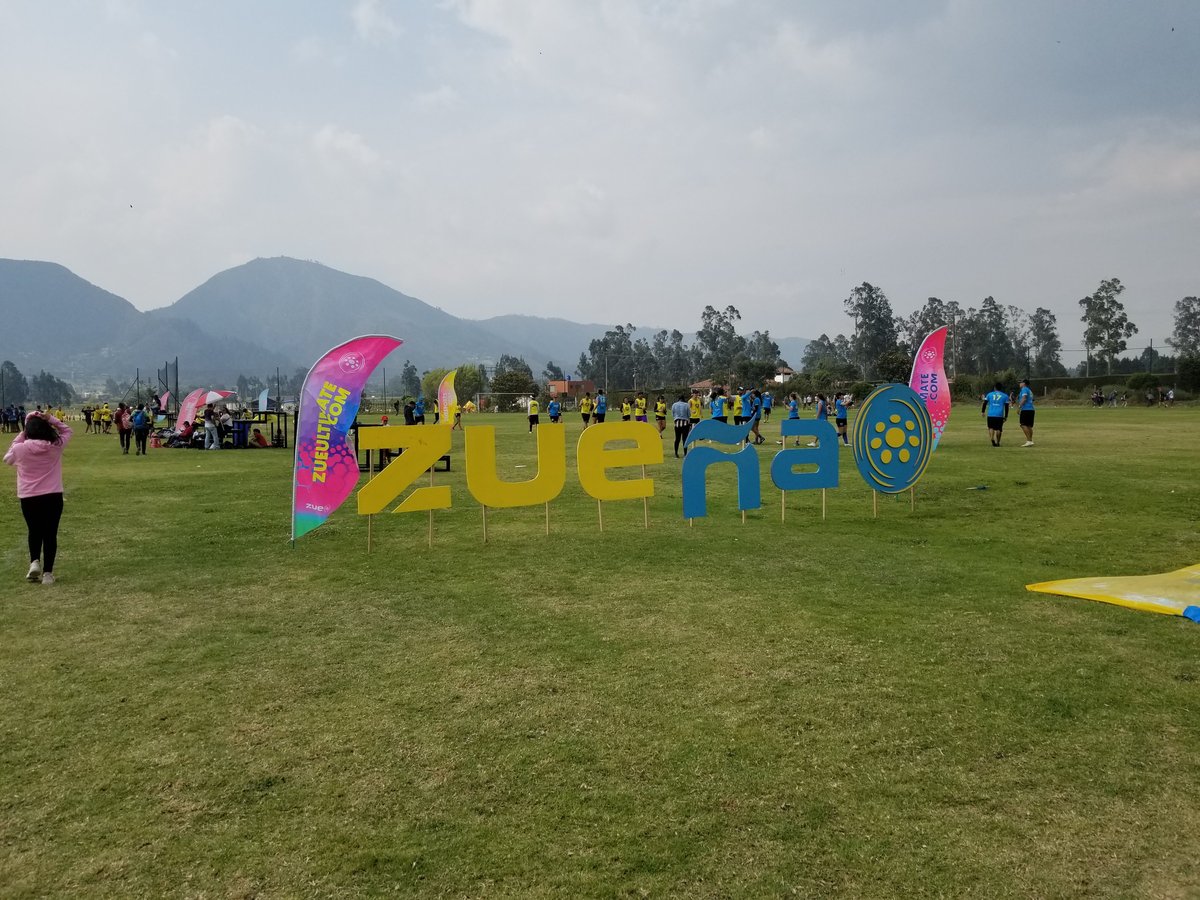 A tournament field. (Bogota, 2020)
In the hardest moments of a game, players need to trust their GAs. That trust comes from how well a GA does the job, game after game. A GA who does not get regular practice cannot do their best.
So, before you recruit anyone, decide which events your GAs will work. Plan how your GAs will get enough games.
A good start is 2 to 3 events a year.
Which events you choose depends on your country. Think about the mix of events in your calendar.
The rules at your events
- why the basic rules are not enough when you use GAs
- the choices your NF makes for each event it runs
- what to do once you have chosen
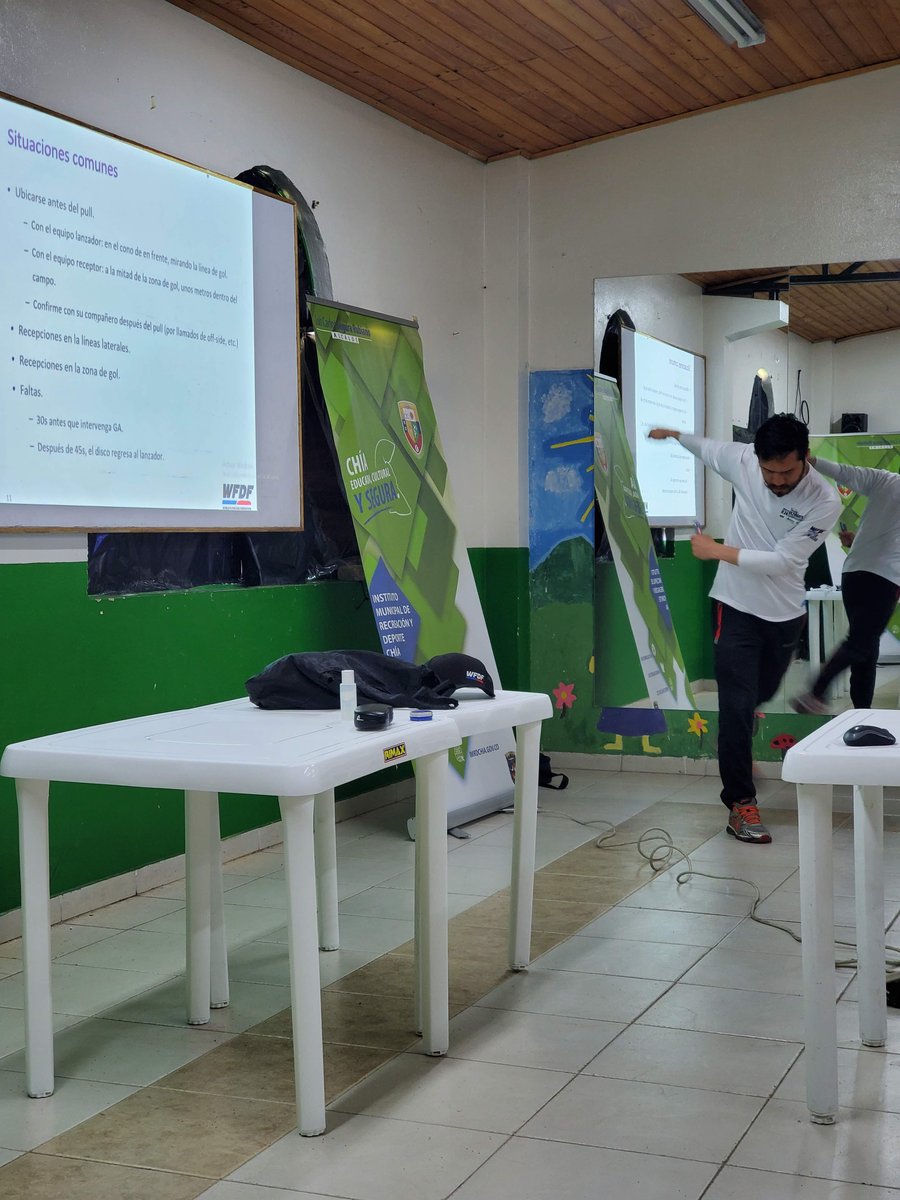 A rules session. (Bogota, 2022)
Why the rules matter
Ultimate is played under the WFDF Rules of Ultimate (the current edition is 2025-2028). We call these the basic rules.
The basic rules do not mention Game Advisors. So at an event that uses only the basic rules, a player could say: "The rules say nothing about people on the sideline getting involved. Please leave our game."
WFDF also publishes an Appendix to the rules. It adds extra rules for WFDF championships. One section, B6.3, says what a GA may do and lists the GA's duties.
At every event where you use GAs, add B6.3 to the rules. This is the one thing GAs must have.
The choices for each event you run
The rest of the Appendix is optional. Some parts are tools that GAs often use:
- Time between points (A5.4). The offence must be ready 60 seconds after a goal. The pull must be released by 75 seconds, or 15 seconds after the offence is ready if that is later. GAs time this and blow the whistles.
- Time for a discussion (A5.7). After 15 seconds the captains should help. After 45 seconds the call is treated as contested.
- Spirit Stoppages (A13).
GAs can do their job without these tools. Slow play is never part of the game: the basic rules already say that play must not be delayed, and any player can make a "Delay of game" call (for example, rules 8.5.2 and 10.5). But your GAs must know which tools are in use at each event, or that none are. Otherwise a GA may time a pull, or blow a whistle, for a rule that does not apply.
So, for each event you run, your NF decides:
- to add B6.3, so that GAs can be part of the game (always needed)
- which of the other Appendix tools to use, if any
- any local changes, for example the number of timeouts
You can choose differently for different events.
Some of the Appendix may not fit your events, for example the rules on fields, uniforms or rosters. It is fine to leave those out.
Once you have chosen
At every event where you want to use GAs you should elect a Head GA, to organise them. Tell the Head GA and the tournament director which rules are in use.
- Decide early, before teams register.
- Publish the rules with the event information. Name the edition, and list each part of the Appendix you use and any local changes. For example: "WFDF Rules of Ultimate 2025-2028, plus Appendix A5.4 and A5.7 (time limits for pulls, and for discussions). Timeouts: 3 in total per game, each lasting 2 minutes."
- Tell the captains before the event, and again at the captains' meeting.
- Keep it the same across similar events, so players and GAs do not have to learn new rules each time.
GAs must know any changes to the rules at the event where they are working. So the Head GA should brief the GAs on the event's rules. In their meeting with each team before the game, GAs also talk about any rules that are special to the event (B6.3.2.1).
Paying for your GA programme
- what NFs pay for when they use GAs
- how other countries have funded their programmes
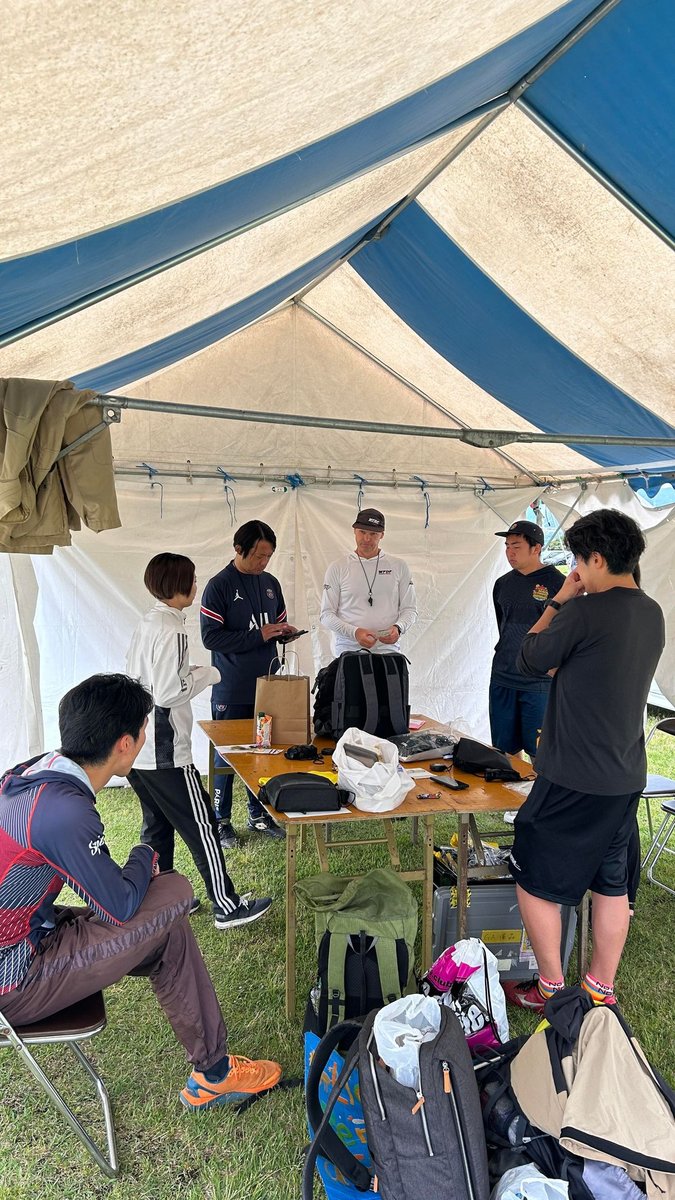 A briefing in a tent. (Fuji City, Japan, 2024)
What to budget for
GAs give up their weekends to work. Most NF programmes cover some of the GAs' transport, accommodation or food, and some cover all three. Some programmes also give GAs a daily payment for their time. The money can come from the tournament, or be shared across events.
How other countries do it
| Country | What they cover |
|---|---|
| Australia | A daily payment of $50. The GA budget per event grew from about $1,500 to about $3,500, for a Head GA plus 5 others. It covers flights for the person running GA support, accommodation, food and local transport. Holding two national events on neighbouring weekends helps share costs. Shirts are bought up front, with a box of spares. |
| Colombia | At first, GAs were paid little or nothing, and this was one reason the group did not grow. GAs then became a paid service that tournaments plan into their budget. Teams also pay GAs to come to their trainings. |
| France | Transport and lunch, but not dinner. |
| Malaysia | Money back for costs, plus meals, accommodation and team merchandise. |
The lesson from Colombia is worth repeating: if GAs are not supported, your group will struggle to grow.
Seeding clinics
WFDF is moving away from training clinics. We may still run a seeding clinic: a chance to train the first group of GAs in your country, as we did recently in Poland and France. After that, we hope your GAs can move forward on their own, using the courses here on the WFDF Academy.
For a seeding clinic, WFDF pays the trainer's travel and one team meal. The host usually covers the room, a projector, lunch, transport and shirts for trainees. Some hosts charge trainees a small fee (up to about USD 20), and charging women a lower fee is encouraged.
WFDF's GA training budget can also help local tournaments that want to use GAs. Ask WFDF.
Choosing your Country Coordinator
Your Country Coordinator runs your GA programme. Your NF appoints them. They:
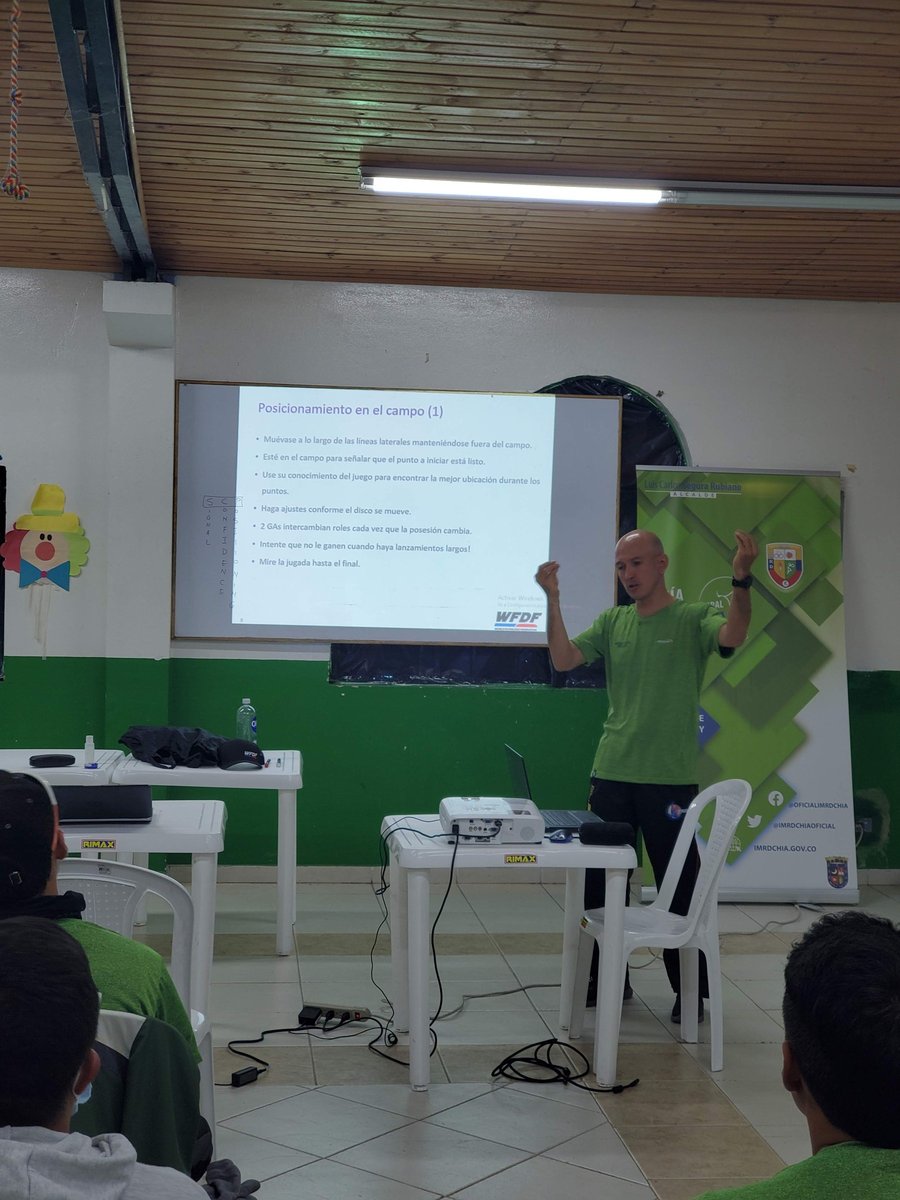 A trainer leads a session on positioning. (Bogota, 2022)
- recruit and train your GAs, or find a trainer to do it
- get GAs to the events your NF has chosen
- work with your NF, and with WFDF
Two jobs, one person or two
The programme has two jobs:
- Training GAs. Bringing trainees into the crew at your events, and judging who is ready.
- Running the programme. Working with your NF and with WFDF, planning the year, and getting GAs to events.
When a country starts, one person often does both. That is fine. Countries that have run a programme for longer often split the jobs: one person trains GAs, and the Country Coordinator runs the programme.
Who makes a good Country Coordinator?
Look for someone who:
- knows your national Ultimate community well
- is organised, and good at keeping in touch with people
- is trusted by players, and by your NF
- ideally, has worked as a GA, or wants to
WFDF's Country Coordinator course on the WFDF Academy covers the rest: recruiting GAs, running training, and keeping your GAs sharp.
What happens next
Once your NF has chosen its events, agreed the rules and the money, and appointed a Country Coordinator, hand over to your Country Coordinator.
They take the Game Advisor Country Coordinators course on the WFDF Academy. It covers:
- what your NF should already have in place
- recruiting GAs, fairly
- helping trainees through the online Game Advisor Fundamentals course
- training new GAs at your events, and grading them on the field
- how many GAs to train, and how to rotate them at your events
Your trainee GAs learn the theory of how to Game Advise by taking the Game Advisor Fundamentals course on the WFDF Academy. They then attend a practical session led by your Country Coordinator or Trainer, and if successful they become new NF GAs.
If you have questions, contact the Chair of the WFDF GA Sub-committee.